
El Salvador's Pacific Coast for First-Timers: What the Surf Coast Is Actually Like
A first-timer orientation to El Salvador's Pacific surf coast — the geography, pace, beaches, safety, food, and practicalities before you book.
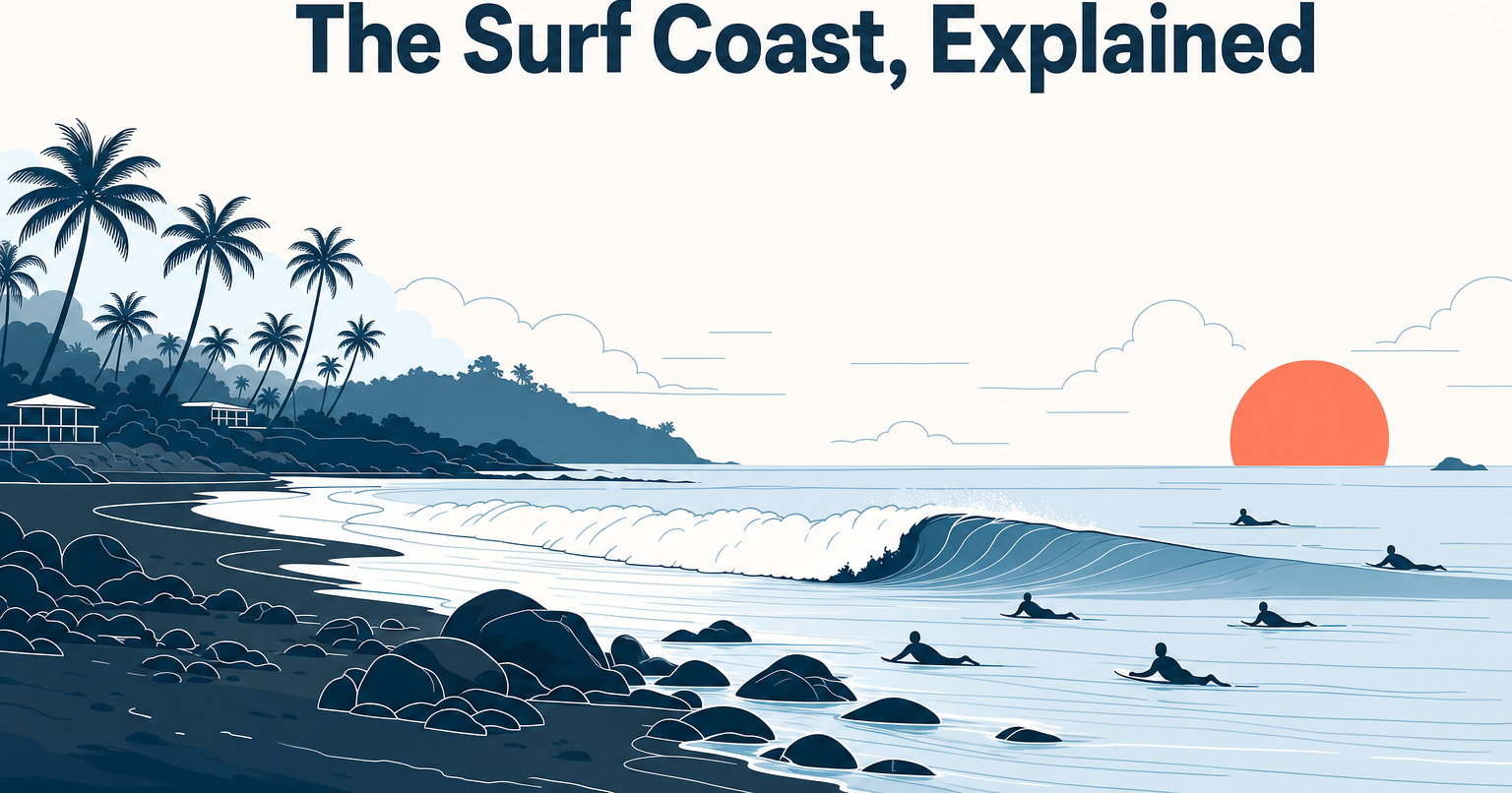
El Salvador’s Pacific Coast for First-Timers: What the Surf Coast Is Actually Like Before You Book
El Salvador’s Pacific surf coast, the stretch known as Surf City that runs west from La Libertad through El Zonte, is a warm, volcanic-black-sand shoreline with a slow, small-town rhythm, world-class right-hand point breaks, and a mostly local dinner scene that closes early. It feels closer to Baja twenty years ago than to a resort strip. If you are picturing Tulum or Tamarindo, recalibrate: this coast is quieter, less polished, and much more about the ocean than the nightlife.
Here is what a first-time adult traveler actually needs to know before committing to a property or a town.
The geography in one paragraph
The coast you care about is a roughly 20-kilometer arc in the department of La Libertad. From east to west: La Libertad city (working port, fish market), then Playa El Majahual, then the three villages travelers actually talk about, El Sunzal, El Tunco, and El Zonte. El Sunzal and El Tunco are neighbors, separated by a headland and about a five-minute drive. El Zonte sits another fifteen minutes west. San Salvador and the international airport (SAL) are both under an hour away by car on a good road. For orientation, our location page has the map.
What the beach itself is like
The sand is dark grey to black, volcanic, and gets hot by mid-morning: bring flip-flops, not bare feet. Most of the “beaches” here are cobble and rock points rather than long swimmable stretches. El Sunzal and El Tunco are point breaks, meaning waves peel along a rocky bottom, not a sandy shore. You do not come here to lie on soft sand with a novel; you come to watch the Pacific do serious work, swim at the right moments, and eat with your feet near the water.
If you want sand you can walk for an hour, look at Playa El Zonte or drive east to Playa San Diego. For a full breakdown, see our best beaches guide.
The pace and the crowd
Weekdays are quiet. Weekends, especially Saturday, bring domestic day-trippers from San Salvador to El Tunco’s main street. El Tunco is the loudest of the three villages, with hostels, bars, and a small club scene that gets going Friday and Saturday. El Sunzal is calmer, more residential, and where surfers who want to sleep before a dawn paddle tend to base themselves. El Zonte is the most spread out and the most “off-grid” feeling of the three.
For adults who want ocean air without a DJ set at midnight, we go deeper into the trade-offs in El Tunco vs El Sunzal for couples.
Safety, honestly
El Salvador in 2026 is not the country the old headlines describe. The coast in particular feels calm, walkable at night in the village centers, and used to international visitors. You should still take normal travel-anywhere precautions: do not leave valuables on the beach, use a registered driver or a booked transfer from the airport rather than flagging a random car, and keep your phone off the restaurant table. Our safety primer covers the specifics.
The food scene
Expect casual, ocean-facing. Pupusas (thick corn tortillas stuffed with cheese, beans, or loroco) are the staple, usually 1 to 2 USD each at a local pupuseria. Fresh grilled fish, ceviche, and shrimp dominate the menus at the beachfront restaurants. Coffee is excellent because the country grows it. Kitchens tend to close by 9 or 10 pm outside of El Tunco’s main strip: eat earlier than you would in Europe.
Practical things people always ask
- Currency: US dollar. Bitcoin is legal tender but rarely needed. Bring some small bills for pupusas and tips.
- Language: Spanish. English is common in the surf villages and in nicer accommodations, less common with taxi drivers.
- Getting there: SAL airport is 45 minutes to El Sunzal by car. You do not need a rental for a beach-only trip. See how to get from San Salvador to El Sunzal without a rental car.
- When to come: The green swell season runs roughly March through October. Dry season (November to February) has smaller, cleaner surf and less rain.
- Water: Drink bottled or filtered. Ice at established restaurants is fine.
The obvious next step
Once the coast makes sense as a place, the next question is where on it to sleep. If you want ocean views, real quiet, and a five-minute walk to El Sunzal’s point without a party next door, the Cerromar side is the answer, which is exactly where Casa Marea sits. Browse the stays when you are ready to picture the trip.