
The Best Day Trips From El Sunzal and El Tunco, Ranked by Drive Time
A ranked guide to day trips from El Sunzal and El Tunco — Tamanique waterfalls, Santa Ana volcano, Ruta de las Flores, El Boquerón, and more. Drive times, practical tips, and what to skip on a short stay.
The Best Day Trips From El Sunzal and El Tunco, Ranked by Drive Time
If you are staying on the Surf City coast and want one day away from the sand, the short answer is this: Tamanique waterfalls if you have half a day (about 35 minutes inland), Santa Ana volcano if you are willing to give up a whole one (two hours each way, and the departure time is not yours to choose), and Ruta de las Flores only if your free day lands on a Saturday or Sunday. El Boquerón and Lake Coatepeque are the easy middle ground. Suchitoto is genuinely beautiful and, honestly, too far to enjoy in a day from the beach.
El Salvador is small. That is the advantage nobody mentions until you are already here. Almost everything worth seeing sits inside a two-hour radius of the coast, so you can climb a volcano and still be back in the pool with salt in your hair before dark.
Drive times below are measured from Cerromar, the hillside pocket of houses between El Tunco and El Sunzal where our four rentals are. From El Tunco village itself, subtract about five minutes. Here is how I rank them for guests staying four to seven nights.
Cascadas de Tamanique: the best half day on the coast
A chain of waterfalls in the coffee hills directly above El Tunco, reached by a steep dirt descent and a fair bit of scrambling over wet rock. Guides from the village meet you near the entrance, and they are not optional in the best sense of the word: they know which pools are deep enough to jump into after a week of rain and which have silted up. Expect to pay them in cash, roughly ten to fifteen dollars a person depending on group size.
The jumps are the part people worry about. The tallest is around eight metres, there are smaller ones before it, and you can walk past every single one of them without anybody making a thing of it.
Go early, 7 or 8am, and be back on the coast for lunch. Shoes with grip, not flip flops. In the wet months, May through October, the rain almost always arrives in the afternoon, which is another argument for the early start. The one week to skip it is the middle of a genuine multi-day downpour, when the descent turns into a mudslide and the water runs brown.
This is the highest reward-per-hour trip on the list, and it barely dents your day.
Santa Ana volcano (Ilamatepec): the one full day worth giving up
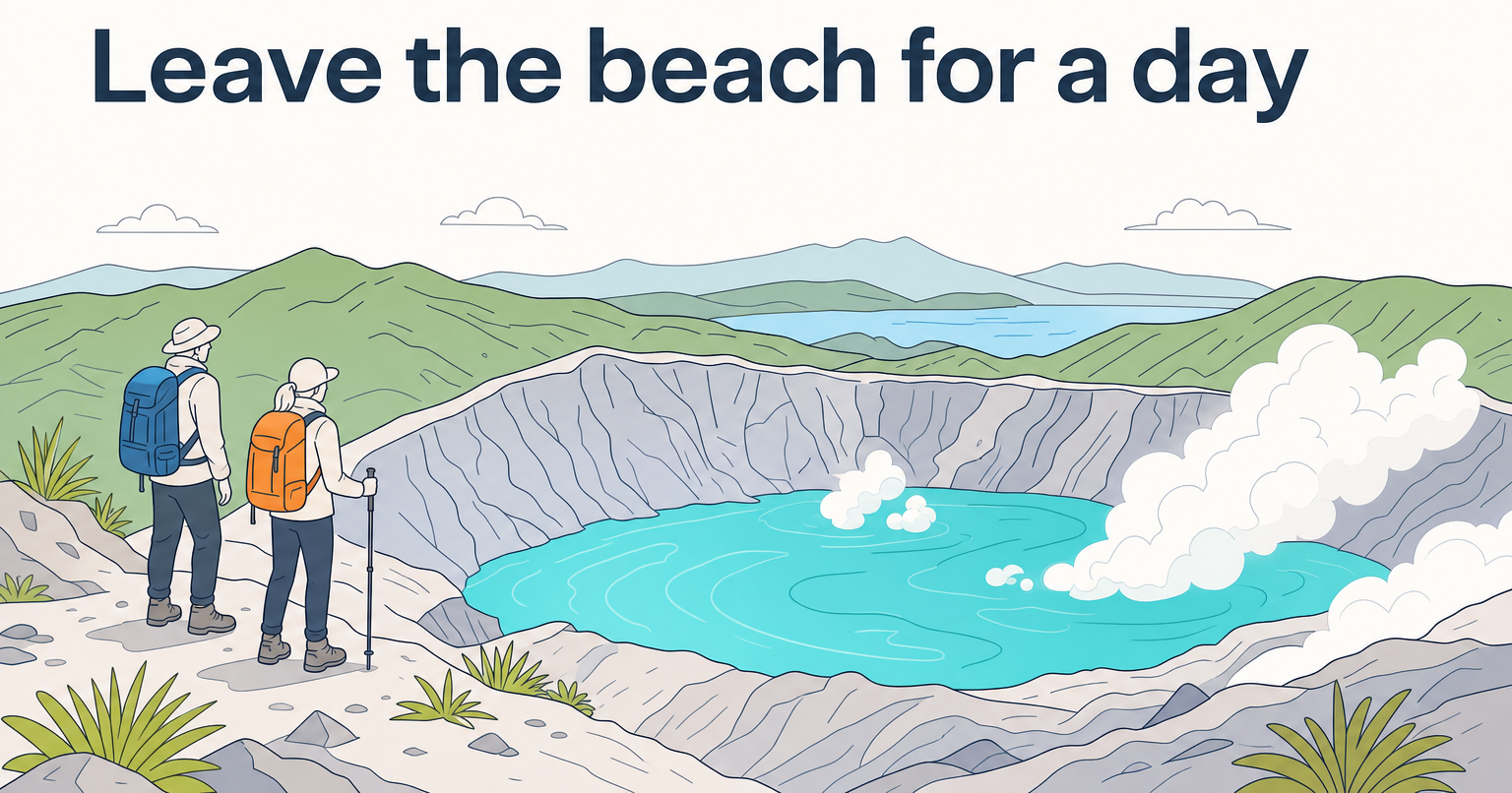
The classic El Salvador hike, and it earns the reputation. Two hours up from the Cerro Verde park entrance to a crater holding a lake the colour of antifreeze, sulphur steaming off the surface, Lake Coatepeque laid out below you on one side.
Here is the part that wrecks people’s plans: you do not set off when you feel like it. The summit hike has long run as an organised group with tourist-police accompaniment, leaving late morning, and if you miss it you do not go up. Those rules have shifted more than once in recent years, so have your driver or your host confirm the current departure time the day before rather than trusting a blog post, this one included.
Working from the traditional 11am group, the sane plan is leaving the coast around 7am, taking the coastal highway west and turning up through Sonsonate, and using the spare half hour at Cerro Verde for coffee and the entrance fee. Park fees at the national parks are single-digit dollars and cash only, so bring small bills. El Salvador uses the US dollar, which spares you one whole category of holiday admin.
It is not a technical climb, but the last stretch is loose volcanic scree and the summit is properly cold and windy while the coast sits at 32 degrees. Bring a layer. People show up in board shorts and regret it within ten minutes.
Pair it with a late lunch at Lake Coatepeque on the drive home. Several of the lakeside restaurants will let you use their dock and pool if you eat there, which is the correct way to end that day.
Ruta de las Flores: check the calendar first
A string of highland coffee towns, Nahuizalco, Salcoatitán, Juayúa, Apaneca and Ataco, strung along a ridge above a thousand metres. Juayúa’s weekend food fair is the anchor: grills going in the plaza, rabbit and iguana on the menu next to more familiar things, coffee everywhere. Ataco is the mural town, walkable in an hour, good for slow shopping and better coffee than most of what you will find on the coast.
This is the trip for the person in the group who is tolerating a surf holiday rather than enjoying it. I have watched it convert more than one reluctant partner into someone asking about next year.
Brilliant on a Saturday or Sunday. On a Tuesday, half the towns are shuttered, the fair does not exist, and you drove two hours for a quiet plaza and a closed bakery. Plan around the calendar, not the guidebook.
El Boquerón: the low-effort mountain day
The crater park on the San Salvador volcano, about an hour and fifteen minutes from the coast. A paved 20-minute walk gets you to a viewpoint over a crater several kilometres across, the air suddenly cool and full of pine, and the access road is lined with restaurants looking down over the capital.
This is the trip for a day when the surf is flat and nobody wants a project. Combine it with an afternoon in San Salvador’s restored historic centre, where the stained glass interior of Iglesia El Rosario is the most underrated sight in the country and nearly always empty.
Joya de Cerén and San Andrés: 90 quiet minutes of Maya history
Joya de Cerén is a farming village buried by volcanic ash around 600 AD and preserved down to the sleeping mats and the food still sitting in pots. It is a UNESCO site, it is about an hour from the coast, and it is small: ninety minutes, not a day. San Andrés sits close by and pairs neatly with it, or with El Boquerón.
Worth it if history moves you, and set your expectations honestly: this is archaeology under protective roofs, not pyramids rising out of jungle. Check the day too, as the archaeological parks generally close on Mondays.
What to skip on a short stay
- Suchitoto. A lovely colonial town on Lake Suchitlán, but it is two hours plus each way with San Salvador traffic sitting in the middle of the sandwich. Do it as an overnight or save it for the next trip.
- Stacking two big trips in one day. Santa Ana plus Ruta de las Flores looks reasonable on a map and ruins both. You will see the coffee towns through a car window at 5pm.
- Los Cóbanos out of season. The snorkelling only justifies the drive when visibility holds up, which generally means the drier months.
How to actually get there
Most of our guests hire a private driver for the day rather than renting a car. The driver waits at the trailhead, nobody negotiates a mountain road in the dark after five hours of walking, and the day rate for a full inland trip usually lands in the range you would spend on two airport transfers anyway. Ask for a quote that includes waiting time, and confirm it before you get in. Our guide to reaching the coast without a rental car covers the same drivers we book these trips with, the broader El Salvador travel guide fills in seasons and timing, and these practical travel tips handle cash, tipping and what to carry.
One thing I have learned from hosting: put your inland day in the middle of the stay, never on the last one. Coming home to a quiet house above the Pacific after a volcano is the good version of that day. Doing it with a flight the next morning is not.
If you are still deciding where to base yourself, our four stays in Cerromar sit close enough to the coastal highway that a 7am start is painless, and close enough to the water that the other six days do not have to involve a car at all.